Wednesday, January 25, 2012

Embattled health fund director resigns (AP)

DAVOS, Switzerland ? The head of the $22.6 billion Global Fund to Fight AIDS, Tuberculosis and Malaria has abruptly resigned, part of a shakeup in its top management since revelations about corruption and misspending severely rattled some of its biggest donors.

Dr. Michel Kazatchkine, a French clinical immunologist who has served as executive director of the global health fund for the past five years, announced Tuesday that he will resign in March. The shakeup resulted from an internal review to address problems highlighted in Associated Press stories last year.

Following the AP articles about the fund's losses, some donors withheld funding, and the fund scaled back its spending.

Foreign Minister Alain Juppe of France, the fund's second-largest donor after the United States, said in a statement he "deeply regrets" the doctor's resignation and hailed his "remarkable work" over nearly five years.

Last year the fund's board decided to create a new general manager position after the fund was forced to cancel its plans to expand its programs by more than $1 billion when its budget projections dropped.

The panel also found unhealthy friction between Kazatchkine and the fund's internal watchdog, Inspector General John Parsons, who has come under pressure as his team of investigators and auditors documented the losses.

Kazatchkine, in a statement released by the fund, cited as a reason for his unexpected departure the board's decision to create the new position of general manager. He said he concluded he should not continue under these circumstances.

The resignation came on the eve of the World Economic Forum meeting in Davos, which played a role in its creation a decade ago. A dinner for the public-private fund is planned Thursday with U.N. Secretary-General Ban Ki-moon and major backers Bill Gates and the Bill & Melinda Gates Foundation.

On Feb. 1, Gabriel Jaramillo, a former chairman and CEO of Sovereign Bank, will take over as general manager. The fund described his job as "a newly created position intended to oversee a process of transformation as it accelerates the fight against the three pandemics by focusing on its management of risk and grants."

Jaramillo, a Brazilian citizen who hails from Colombia, has recently served as a special adviser to the U.N. on malaria and was part of the panel that reviewed the Global Fund's operations.

The Geneva-based fund was set up in 2002 as a new way to coordinate world efforts against the diseases and to speed up emergency funds from wealthy nations and donors to the places hardest hit. It currently pays for the treatment of around half the developing world's AIDS sufferers.

Outside of its donor nations and celebrity backers, the biggest private donor is the Bill & Melinda Gates Foundation, which has pledged $1.15 billion and provided it with $650 million so far.

The fund created the outside panel in March to address concern among donors after Associated Press articles in January 2011 about the loss of tens of millions of dollars in grant money because of mismanagement and alleged fraud.

Germany, the European Commission and Denmark withheld hundreds of millions of euros in funding pending reviews. Germany ? the fund's fourth-largest donor_ has since restored its funding.

Source: http://us.rd.yahoo.com/dailynews/rss/world/*http%3A//news.yahoo.com/s/ap/20120124/ap_on_re_eu/eu_aids_fund

presidential candidates mild kidney failure celebrity wife swap gla republican candidates virginia tech mike martz

Geoengineered Food? Climate Fix Could Boost Crop Yields, But With Risks

Altering the upper atmosphere could block enough sunlight to offset the warming effects of climate change and protect food crops. But what are the risks? Enlarge iStockphoto

Altering the upper atmosphere could block enough sunlight to offset the warming effects of climate change and protect food crops. But what are the risks?

iStockphoto

Altering the upper atmosphere could block enough sunlight to offset the warming effects of climate change and protect food crops. But what are the risks?

For a few years now, a handful of scientists have been proposing grandiose technological fixes for the world's climate to combat the effects of global warming ? schemes called geoengineering.

Climate change has the potential to wreak all kinds of havoc on the planet, including the food system. Scientists predict that two variables farmers depend on heavily ? temperature and precipitation ? are already changing and affecting food production in some arid parts of the world where there isn't a lot of room for error. And if the problem worsens on a larger scale, it could do a lot of damage to agricultural yields and food security.

At some point, governments may decide "to do something desperate to protect our food and our people," Ken Caldeira, an environmental scientist at Stanford University, tells The Salt. And that "something desperate" could be geoengineering.

?

One proposal scientists are batting around is to fill the upper atmosphere with tiny particles that could scatter sunlight before it reaches, and warms, the Earth's surface. Sulfate droplets inside volcanic ash clouds already do this naturally. So the idea is that a few million tons of sulfates, sprayed into the stratosphere by airplanes, could produce the same effect artificially.

Scientists have been messing with local weather for decades. China does it all the time, most infamously during the 2008 Olympics. But around 2006, the notion of doing it on a global scale got more traction, especially when Nobel laureate Paul Crutzen got behind it. A backlash ensued, as many pointed out that tampering with such a complex system was far too risky.

Caldeira began studying geoengineering with the intent of proving that it's a bad idea. But his new research suggests that manipulating the climate could actually produce benefits, at least for food production. For instance: a study from his lab, published Sunday in Nature Climate Change, compares the effect on the global food supply of unmitigated global warming versus geoengineering.

The result? Crop yields of wheat, rice and corn would actually get a boost from geoengineering.

Julia Pongratz, a post-doc researcher, led the study. She used computer climate models to simulate a doubling of carbon dioxide levels in the atmosphere. Plants like CO2, but the models showed that the resulting temperature increase would lead to an overall decrease in crop yields.

When she added the cooling effects of geoengineering, however, the model showed crop yields increasing as much as 20 percent. Without the stress of higher temperatures, plants would be able to take full advantage of the extra CO2.

So, does this mean we should start geoengineering today?

"Definitely not," Pongratz says.

For one thing, her simulation only studied the average global temperature ? not the localized effects of geoengineering. Even if the global average remained the same, some regions might get hotter while others get colder. That could cause drastic local or regional changes in climate and weather patterns.

Also, geoengineering wouldn't prevent other harmful effects of higher CO2 levels, such as ocean acidification, she says.

And both of those problems would threaten local food security, especially in areas where people already have trouble getting enough to eat.

Until researchers learn more about the specific consequences of geoengineering, neither Pongratz nor Caldeira is endorsing the idea.

"Tinkering with planetary-scale processes is a very risky business, and one that I think most people would not want to undertake lightly," Caldeira says. "I think it's the sort of thing that people wouldn't consider unless our backs are against the wall.

Source: http://www.npr.org/blogs/thesalt/2012/01/20/145535536/geoengineered-food-climate-fix-could-boost-crop-yields-but-with-risks?ft=1&f=1007

martin henderson golden globes 2012 winners golden globes 2012 red carpet martin luther king jr quotes nfc championship game golden globes red carpet martin luther king jr i have a dream speech

Tuesday, January 24, 2012

Sony's new cameraphone CMOS jams bigger gear into the same space (video)

Sony's done gone and developed a new back-illuminated CMOS designed to improve the state of your casual camerawork. Traditional units mount a merged pixel-sensor and circuit on a supporting substrate -- the innovation here is to produce the two separately and layer them without any additional material. This makes manufacturing easier and without a mount, you're able to lever-in bigger kit into the same space. It's also packing HDR Movie, which like the still-image version, will produce better moving pictures in tricky light. An eight-megapixel version will ship to cellphone producers in March, with a 13-megapixel edition following in June and if Sony's really successful, it might earn enough to buy a copy of Photoshop rather than producing release images in MS Paint.

Continue reading Sony's new cameraphone CMOS jams bigger gear into the same space (video)

Sony's new cameraphone CMOS jams bigger gear into the same space (video) originally appeared on Engadget on Mon, 23 Jan 2012 11:56:00 EDT. Please see our terms for use of feeds.

Permalink   |   | Email this | Comments


Source: http://feeds.engadget.com/~r/weblogsinc/engadget/~3/XvF-j5gT3O4/

harry morgan john lennon death john lennon death c.j. wilson three stooges pujols mythbusters

Monday, January 23, 2012

Researchers help solve questions about Ethiopians' high-altitude adaptations

Monday, January 23, 2012

Over many generations, people living in the high-altitude regions of the Andes or on the Tibetan Plateau have adapted to life in low-oxygen conditions. Living with such a distinct and powerful selective pressure has made these populations a textbook example of evolution in action, but exactly how their genes convey a survival advantage remains an open question. Now, a University of Pennsylvania team has made new inroads to answering this question with the first genome-wide study of high-altitude adaptations within the third major population to possess them: the Amhara people of the Ethiopian Highlands.

Surprisingly, all three groups' adaptations appear to involve different genetic mutations, an example of convergent evolution.

"These three groups took different genetic approaches to solving the same problem," said senior author Sarah Tishkoff, a Penn Integrates Knowledge professor with appointments in the genetics department in Penn's Perelman School of Medicine and the biology department in the School of Arts and Sciences.

In addition to Tishkoff, the research was led by Laura B. Scheinfeldt, a research scientist in the genetics department at the Perelman medical school. Other members of the genetics department who contributed to the research are Sameer Soi, Simon Thompson, Alessia Ranciaro, William Beggs, Charla Lambert and Joseph P. Jarvis.

The Penn team collaborated with Dawit Wolde Meskel, Dawit Abate and Gurja Belay of the Department of Biology of Addis Ababa University.

Their research was published today in the journal Genome Biology.

One of the guiding principles behind evolution is natural selection; the more an organism is suited to its environment, the more likely it is to survive and pass on its genes. In high-altitude environments, oxygen concentration is low, a condition that can rapidly sicken ? even kill ? individuals who are not acclimated.

"As genetic anthropologists," Scheinfeldt said, "we know what patterns of genetic variation we expect to see after positive, or Darwinian, selection has occurred. Then we look for those patterns in the genome and try to make biological sense of what we find.

"The easiest way for us to do this is to look at situations where there's been very strong selective pressure: a disease with a really high mortality rate, or here at high-altitude where there are hypoxic conditions. This kind of situation makes a dramatic difference in terms of who passes on their genes, so it gives us more power to find the genetic signatures left behind."

Pregnant women are especially susceptible to the physiological pressure represented by hypoxia, which influences the birth weight and health of their children. Yet people have been living in the high-altitude regions of the Andes and the Tibetan Plateau for generations, with little apparent ill effect.

Anthropologists, notably, Cynthia Beall, of Case Western University, and Lorna Moore, of Wake Forest University, have therefore extensively documented their physiological traits, trying to understand how these groups offset the problems pregnant women would normally have in hypoxic environments. More recently, geneticists have attempted to correlate these physical traits, or phenotypes, with the genes that are responsible for them, or genotypes.

Researchers have long wanted to add additional populations for comparison, and while the people of the Ethiopian Highlands met the criteria, living at over 3,000 meters above sea level, economic, linguistic and geographic hurdles stood in the way of collecting the data.

"This was an extremely challenging study. The logistics alone, getting permits and permission to do this trip, took us many years," Tishkoff said.

"Sampling from these remote populations was also very difficult," said Simon Thompson, who was part of the group's field team. "Roads were impassable and we spent a lot of time just trying to find the groups that were living at the highest altitude possible."

The researchers compared the genotypes and phenotypes of Amhara participants with those of two other Ethiopian groups that live at lower altitudes. They also compared the Amhara group with Nigerian and European groups that live at or around sea level.

"We make these comparisons," Scheinfeldt said, "to figure out where in the genome the high-altitude group looks distinct from the other groups. Those distinct areas are candidate regions for genetic variants contributing to high altitude adaptation. Two of the top candidates are involved in the HIF-1 pathway, a pathway that is initiated in hypoxic conditions."

Both the Andean and Tibetan populations had mutations related to the HIF-1 pathway as well, but all three groups differed in both genotype and phenotype. One difference in phenotype had to do with hemoglobin, the part of the blood that transports oxygen. Ethiopians and Andeans had hemoglobin levels that were higher than low-altitude populations, but the Tibetans had average levels.

The researchers also discovered a variant in the Ethiopian groups in a gene involved in mitochondrial function. Mitochondria regulate the production of ATP, the chemical cells use for energy, making this gene another interesting candidate for playing a role in adaptation to high altitude.

These differences all seem to play a role in how well a body can maintain homeostasis in low-oxygen conditions, but even seemingly clear advantages, such as higher levels of hemoglobin, are only proxies for more complex phenotypic changes. Putting them together into the big picture of how certain genes translate into a survival advantage will require more focused research based on the Tishkoff lab's findings.

We're chipping away at this question," Scheinfeldt said. "Every little bit helps."

Such research holds promise beyond understanding the history of these populations.

"There's a lot of interest in this kind of research from the biomedical community, in terms of lung physiology and oxygen transport," Tishkoff said. "If one can understand how it is that people who have these genetic adaptations can do fine at these high altitudes while the rest of us suffer, it could help us better understand one of the body's vital systems."

###

University of Pennsylvania: http://www.upenn.edu/pennnews

Thanks to University of Pennsylvania for this article.

This press release was posted to serve as a topic for discussion. Please comment below. We try our best to only post press releases that are associated with peer reviewed scientific literature. Critical discussions of the research are appreciated. If you need help finding a link to the original article, please contact us on twitter or via e-mail.

This press release has been viewed 24 time(s).

Source: http://www.labspaces.net/116918/Researchers_help_solve_questions_about_Ethiopians__high_altitude_adaptations

mukesh ambani bob harper aapl x factor judges x factor judges raiders news raiders news

iPad a Solid Education Tool, Study Reports

More and more schools are jumping on the digital bandwagon and adopting iPads for daily use in the classroom. Publisher Houghton Mifflin Harcourt performed a pilot study to see how effective iPad learning is. Using an iPad textbook for Algebra 1 courses, it found that 20 percent more students scored 'Proficient' or 'Advanced' in standardized tests than their paper textbook using counterparts.

Source: http://feedproxy.google.com/~r/GearFactor/~3/_72bnw2n9vo/

jacksonville jaguars jacksonville jaguars iraq war over iraq war over maurice jones drew megyn kelly unclaimed money

Sunday, January 22, 2012

Renowned Jamaica producer Winston Riley dies at 65 (AP)

KINGSTON, Jamaica ? Winston Riley, an innovative reggae musician and producer, has died of complications from a gunshot wound to the head. He was 65.

Riley died Thursday at University Hospital of the West Indies, where he had been a patient since November, when he was shot at his house in an upscale neighborhood in the capital of Kingston, his son Kurt Riley said Friday.

Riley also had been shot in August and was stabbed in September last year. His record store in Kingston's downtown business district also was burned down several years ago. Police have said they know of no motives and have not arrested anyone.

Kurt Riley told the Jamaica Observer newspaper that the family did not know what motivated the attacks.

"Unfortunately, Daddy didn't wake up so we could talk to him to find out if there was something he was not telling us," he was quoted as saying. "He was a straightforward man who was allergic to hypocrisy."

As a teenager, Riley founded an influential harmony group, The Techniques, which recorded for pioneer producer Arthur "Duke" Reid. Riley also toured with Byron Lee and later gained fame for producing songs such as "Double Barrel" by Dave Barker and Ansell Collins.

He worked with musicians including Gregory Isaacs, Johnny Osbourne, Sister Nancy and Buju Banton.

Musicologist Kingsley Goodison, who knew Riley for more than 40 years, said he was one of the people responsible for introducing reggae to England.

"Winston Riley is an unsung hero," he said. "He was one of the hardest workers in the business."

Riley also is credited with creating the stalag rhythm, which later influenced hip-hop and dancehall. Unlike his contemporaries who shunned dancehall music, Riley embraced contemporary reggae and had several big hits during the 1980s.

One of his biggest productions was singer Tenor Saw's "Ring The Alarm", which has been sampled by several hip-hop artists.

Riley is survived by several children and grandchildren.

Source: http://us.rd.yahoo.com/dailynews/rss/music/*http%3A//news.yahoo.com/s/ap/20120120/ap_en_mu/cb_obit_winston_riley

stephen sondheim los angeles news grammys 2011 mike leach mike leach billy graham scion fr s

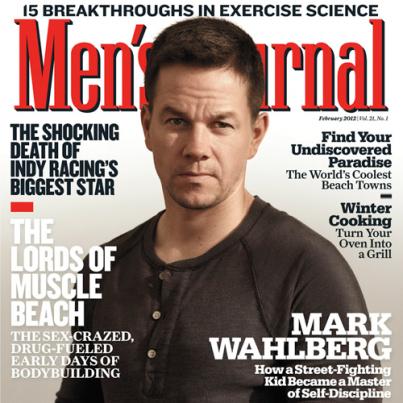
Mark Wahlberg Apologizes For Inane 9-11 Remark


Give Mark Wahlberg credit for a swift, simple and seemingly sincere apology after a boast that he would have fended off 9/11 hijackers and prevented a plane from crashing.

For reasons unknown, he said this to Men's Journal. The quote:

"If I was on the [hijacked] plane with my kids, it wouldn't have went down like it did. There would have been a lot of blood in that first-class cabin and then me saying, 'Okay, we're going to land somewhere safely, don't worry.'"

Mark Wahlberg, Men's Journal

This came up because Mark was initially booked on one of the fights that was hijacked, only to change it serendipitously. He mused about what might've been.

It did not go over well.

Wahlberg's reps promptly issued a statement from the 40-year-old Contraband star admitting the foolishness of his statements and expressing remorse.

"To speculate about such a situation is ridiculous to begin with, and to suggest I would've done anything differently than the passengers on that plane was irresponsible," Wahlberg wrote. "I deeply apologize to the families of the victims."

"My answer came off as insensitive, and that was certainly not my intention."

Source: http://www.thehollywoodgossip.com/2012/01/mark-wahlberg-apologizes-for-inane-9-11-remark/

new orleans hornets time person of the year sag nominations sag nominations derek jeter time magazine person of the year time magazine person of the year

Saturday, January 21, 2012

Brooks chokes up testifying about hospital gift (AP)

CLAREMORE, Okla. ? Country singer Garth Brooks told jurors Friday that he believed he had a "done deal" to honor his late mother with a women's health center in his Oklahoma hometown, and said he still doesn't understand how he received nothing for a $500,000 gift.

Brooks is suing Integris Canadian Valley Regional Hospital in Yukon, accusing it and its president of reneging on a pledge to build the center and name it after his mother, Colleen, who died of cancer in 1999. The center was never built, and Brooks wants his money back, plus punitive damages.

In tearful testimony, Brooks said he thought he had a solid agreement with the hospital's president, James Moore. Brooks said Moore initially suggested putting his mother's name on an intensive care unit, and when Brooks said that wouldn't fit her image, Moore suggested a women's center.

"I jumped all over it," Brooks told jurors. "It's my mom. My mom was pregnant as a teenager. She had a rough start. She wanted to help every kid out there."

Brooks said he gave $500,000 to the hospital anonymously, which he said was his custom when giving to charities. The singer said he, his family and the hospital wanted to keep things quiet until a ribbon-cutting ceremony to announce the center.

He was eventually shown architectural drawings of a proposed center bearing his mother's name. "That's why I thought it was a win-win for everybody," Brooks said.

But nothing happened. The center was never build and his mother's name wasn't attached to anything.

"How this thing went wrong, I don't know," Brooks testified.

"I'm the last of six kids. I was her favorite," Brooks added. "She was my buddy. I was her biggest fan. She was a pistol. All of the parties were at her house. She was just a doll. If anybody met her, (they) would have gotten to love her."

Moore testified earlier this week that a women's center was not among the hospital's plans, though Brooks testified Friday that Moore never told him that while they were negotiating a gift.

The singer donated the money in 2005. Three years later, he exchanged emails with Moore after the hospital president wrote saying the money would be used to help fund new construction, Brooks said.

"As nicely as I can, I'm trying to give him an opportunity to say why he's spending the money and there's no women's center going up," Brooks testified.

Brooks said he sent his accountant to investigate, but that nothing came from the ongoing correspondence.

By March 2009, he'd asked the hospital to either refund his money or give it to another charity. In September 2009, Brooks sued.

"I thought this was going to be mom's chance to bring a women's center to my hometown," Brooks testified.

Brooks' accountant, Cheryl Harris, testified earlier Friday that she wasn't aware of any conditions on Brooks' donation, which was listed as a tax deduction. Asked by Integris lawyer Terry Thomas how she believed the money would be used, she said, "He didn't receive anything physical."

Source: http://us.rd.yahoo.com/dailynews/rss/crime/*http%3A//news.yahoo.com/s/ap/20120120/ap_en_mu/us_people_garth_brooks

kelly slater kelly slater palindrome palindrome asana als disease brittany norwood

Friday, January 20, 2012

IMF seeks up to $500 billion in new funds

Britain's Prime Minister David Cameron, walks out of 10 Downing Street to greet his Italian counterpart Mario Monti outside 10 Downing Street in London Wednesday, Jan. 18, 2012. (AP Photo/Alastair Grant)

Britain's Prime Minister David Cameron, walks out of 10 Downing Street to greet his Italian counterpart Mario Monti outside 10 Downing Street in London Wednesday, Jan. 18, 2012. (AP Photo/Alastair Grant)

Italian Prime Minister Mario Monti, right, talks to British Prime Minister David Cameron as he arrives for a meeting at 10 Downing Street in London, Wednesday, Jan. 18, 2012. (AP Photo/Sang Tan)

Italian Prime Minister Mario Monti, right, removes his coat as he meets with British Prime Minister David Cameron as he arrives for a meeting at 10 Downing Street in London, Wednesday, Jan. 18, 2012. (AP Photo/Sang Tan)

Britain's Prime Minister David Cameron, left, greets his Italian counterpart Mario Monti outside 10 Downing Street in London Wednesday, Jan. 18, 2012. (AP Photo/Alastair Grant)

BRUSSELS (AP) ? The International Monetary Fund said Wednesday that it's aiming to increase its financial firepower by around $500 billion so it can give out new loans to help mitigate a worsening financial crisis.

Responding to widespread speculation surrounding its funding requirements, the Washington-based institution said its staff estimates that countries around the world will need about $1 trillion in loans over the coming years. Most of the concerns center on the 17-nation eurozone, which has been embroiled in a debt crisis for around two years.

"At this preliminary stage, we are exploring options on funding and will have no further comment until the necessary consultations with the Fund's membership have been completed," a Fund spokesman said in a statement.

Thanks to some $200 billion that European countries have recently promised to the IMF, it is already more than one third on its way to reaching its fund-raising goal.

The IMF has put up about a third of the financing of the eurozone's bailouts over the past two years, but there are growing worries that non-European countries will also need more help given the worsening economic outlook.

Earlier, its sister organization, the World Bank, urged emerging countries that they have to be ready for a severe global downturn if the crisis in the 17-nation eurozone intensifies.

The eurozone, in particular, has been pushing countries around the globe to give more funds to the IMF in the hope that it would build up a larger firewall to stop the continent's debt troubles from spreading to large economies like Spain, Italy or even France.

But so far, even countries relatively flush with cash as China or Brazil have been reluctant to put up more money for Europe. The United States is also reluctant to increase the fund's resources.

British Prime Minister David Cameron said Wednesday that the government would be prepared to back an increase but that he would require approval from his Parliament.

"We believe the IMF must always lend to countries, not to currencies," Cameron said at a news conference with Italian Premier Mario Monti. "We would only act if that was with others, not just as part of a eurozone measure.

However, Cameron said it's up to the eurozone itself to prove that it's "standing behind its own currency."

How the IMF's fund-raising goal will be reached is set to be discussed at a meeting of finance ministers of the Group of 20 leading economies in Mexico next month.

____

David Stringer in London contributed to this story.

Associated Press

Source: http://hosted2.ap.org/APDEFAULT/f70471f764144b2fab526d39972d37b3/Article_2012-01-18-EU-IMF-Resources/id-020f51e822d948f2accb877e04193ea1

the hub pat robertson evan rachel wood i don t know how she does it katamari roatan bobby fischer

Thursday, January 19, 2012

Stocks add to steady climb; Dow gains 45 (AP)

NEW YORK ? Strong corporate earnings reports and the lowest unemployment claims in almost four years gave investors more reasons Thursday to take risks on stocks, and the market continued its quiet but solid January climb.

The Dow Jones industrial average gained 45.03 points to close at 12,623.98. The Standard & Poor's 500 index added 6.46 points to close at 1,314.50. Both averages are at their highest since July.

Volume was slightly above average. The market has been subdued this year: The S&P has moved up or down 1 percent or more only twice, and the Dow has moved 100 points only once, a 179-point gain on opening day, Jan. 3.

But the gains have been steady. The S&P has closed higher 10 of 12 days, and all three major averages have recorded healthy advances for the young year ? 3.3 percent for the Dow, 4.4 percent for the S&P and 7 percent for the Nasdaq composite index.

Investors appear ready to believe that the economic recovery is for real and getting stronger.

"The market is screaming loud and clear," said Doug Cote, chief market strategist with ING Investment Management. "Prices have lagged fundamentals, and now they're catching up."

After the market closed, Google stock plunged more than 10 percent after its earnings per share badly missed Wall Street expectations. Intel and Microsoft rose slightly in after-hours trading after more encouraging reports.

In a sign of a bigger appetite for risk, investors moved money out of U.S. debt, a haven during the stock market's volatile second half of 2011. The yield on the 10-year U.S. Treasury note increased to 1.98 percent from 1.90 percent Wednesday.

The market was led by industries that tend to perform best when the economy is getting stronger ? consumer discretionary stocks, financials and industrial companies.

Of the 10 categories of stocks in the S&P 500, the only one that lost considerable ground was utilities ? a safe play for investors during turbulent times and the best-performing category last year.

Cote said the market's gains could accelerate as investors begin to focus more on economic fundamentals in the United States instead of worries about their exposure to risk.

And the economic news Thursday was good: The number of people seeking unemployment benefits plummeted last week to 352,000, the fewest since April 2008. The decline added to evidence that the job market is strengthening.

U.S. consumer prices were unchanged last month, a signal inflation is under control. In the housing market, a third straight increase in single-family home building in December was offset by a drop in apartment construction.

France and Spain also held successful bond auctions, easing concerns about the debt crisis in Europe. As global risk factors subside, Cote predicts that markets will see "a strong snap-back rally."

Bank of America rose 2 percent and Morgan Stanley rose 5 percent after reporting encouraging financial results. Bank of America returned to a profit in the last three months of 2011, while Morgan Stanley's loss was much less than forecast.

Renewable Energy Group Inc., the nation's largest producer of biodiesel, edged up 10 cents to $10.10 on its first day of trading. It was the first initial public offering of stock this year.

Trading was halted in shares of Eastman Kodak, the iconic photography company, after it filed for Chapter 11 bankruptcy protection. Kodak could not find a buyer for its trove of 1,100 digital imaging patents.

The Dow's gain for the day amounted to 0.4 percent. The S&P's came to 0.5 percent. The Nasdaq added 18.62 points, or 18.62 points, to close at 2,788.33.

Among other stocks in the news:

? eBay Inc., the online auction company, rose 3.9 percent after it beat Wall Street earnings forecasts and gave a healthy outlook for the year.

? Southwest Airlines Co. rose 3.1 percent after it said its fourth-quarter net income and revenue jumped. Southwest said it expects strong revenue in the first quarter too, based on passenger-booking trends.

? Johnson Controls Inc., an auto parts and building equipment maker based in Milwaukee, fell 8.8 percent. Its profit and revenue fell short of Wall Street forecasts. It also cut its forecasts, blaming weaker auto production in Europe, a lower euro and poor demand for batteries.

Source: http://us.rd.yahoo.com/dailynews/rss/earnings/*http%3A//news.yahoo.com/s/ap/20120119/ap_on_bi_st_ma_re/us_wall_street

aaron rodgers super bowl 2012 2012 golden globe nominations tom brady houston texans houston texans texans

NBA's Abdul-Jabbar now global cultural ambassador

Secretary of State Hillary Rodham Clinton looks up at global cultural ambassador and former NBA basketball star Kareem Abdul-Jabbar, Wednesday, Jan. 18, 2012, at the State Department in Washington. Abdul-Jabbar will travel the world to engage a generation of young people to help promote diplomacy. (AP Photo/Jacquelyn Martin)

Secretary of State Hillary Rodham Clinton looks up at global cultural ambassador and former NBA basketball star Kareem Abdul-Jabbar, Wednesday, Jan. 18, 2012, at the State Department in Washington. Abdul-Jabbar will travel the world to engage a generation of young people to help promote diplomacy. (AP Photo/Jacquelyn Martin)

Secretary of State Hillary Rodham Clinton laughs after receiving a Los Angeles Lakers basketball jersey as a gift from global cultural ambassador and former NBA basketball star Kareem Abdul-Jabbar, Wednesday, Jan. 18, 2012, at the State Department in Washington. Abdul-Jabbar will travel the world to engage a generation of young people to help promote diplomacy. (AP Photo/Jacquelyn Martin)

Secretary of State Hillary Rodham Clinton looks up at global cultural ambassador and former NBA basketball star Kareem Abdul-Jabbar, Wednesday, Jan. 18, 2012, at the State Department in Washington. Abdul-Jabbar will travel the world to engage a generation of young people to help promote diplomacy. (AP Photo/Jacquelyn Martin)

(AP) ? The National Basketball Association's all-time scoring leader is now a global cultural ambassador.

The U.S. State Department announced Kareem Abdul-Jabbar's appointment Wednesday.

Ann Stock, assistant secretary of state for education and cultural affairs, says Abdul-Jabbar will travel the world to engage a generation of young people to help promote diplomacy.

Stock says the appointment is part of Secretary of State Hillary Rodham Clinton's vision of "Smart Power" that combines diplomacy, defense and development to "bridge the gap in a tense world through young people."

Abdul-Jabbar will travel to Brazil on Jan. 22 for a number of events centering on education, using his own experiences to help connect with young people.

The legendary center scored 38,387 points during his 20-year NBA career.

Associated Press

Source: http://hosted2.ap.org/APDEFAULT/4e67281c3f754d0696fbfdee0f3f1469/Article_2012-01-18-People-Abdul-Jabbar/id-9c6de1e1a76e45c088ee8ca566fbb9a5

camaro zl1 bob sanders evan longoria janeane garofalo janeane garofalo braves braves

Wednesday, January 18, 2012

MakerBot 3D printer is the real star of this adorable stop-motion music video (Yahoo! News)

We told you a few days ago about the incredible?MakerBot Replicator, a?3D printer showcased at the 2012?Consumer Electronics Show. We knew it was awesome, we were excited about the thought of creating our own 3D objects, and then we saw this video, created by MakerBot Industries to show off some of what it can do. Trust us, this video is seriously fun.

Called "The Right Heart," it's the simple tale of a princess looking for love, and it features characters and set pieces created by the MakerBot Replicator, and a catchy song by Scary Car (Brooklyn musicians?Bryan Scary and?Giulio Carmassi). And a dragon. Just wait till you get to the dragon. We won't spoil the ending, but take our word for it, it's worth watching.

[via?The Next Web]

This article was written by Katherine Gray and originally appeared on Tecca

More from Tecca:

Source: http://us.rd.yahoo.com/dailynews/rss/tech/*http%3A//news.yahoo.com/s/yblog_technews/20120117/tc_yblog_technews/makerbot-3d-printer-is-the-real-star-of-this-adorable-stop-motion-music-video

traffic report opensky dia frampton dia frampton zook eric decker eric decker

New Jersey Governor: cut income tax brackets by 10 percent (Reuters)

(Reuters) ? All New Jersey income tax brackets should be cut 10 percent, Governor Chris Christie proposed on Tuesday, saying the state was on the comeback trail due to harsh budget measures taken last year.

The Republican governor in his annual State of the State address also said the earned income tax credit that aids the working poor should be fully restored after being cut in 2010.

Echoing other governors around the nation, Christie also recommended a series of changes in education, from stiffening requirements for teacher tenure to laying off the least effective teachers instead of the most junior ones.

(Reporting By Joan Gralla; Editing by Diane Craft)

Source: http://us.rd.yahoo.com/dailynews/rss/business/*http%3A//news.yahoo.com/s/nm/20120117/pl_nm/us_christie

pabst blue ribbon mac miller omarion gabby gabby marcel the shell with shoes on ecu

Tuesday, January 17, 2012

International Development - Leasing Finance Specialist

?Leasing Finance Specialist

About the Assignment: IESC is recruiting for an experienced Jordanian or Jordanian American Leasing Finance Specialist for the anticipated USAID Jordan Competitiveness Program. IESC is a subcontractor, responsible for the Access to Finance component of the program, to a large prime contractor that is submitting a proposal to USAID Jordan. The Jordan Competitiveness Program (JCP), a two-year base period and three one-year options Program aims to enhance Jordan?s competitiveness, promote sustainable economic growth, and increase employment. USAID/Jordan expects that the program will result in:

?

  • A Jordanian business enabling environment that is supportive of business development, growth, investment and innovation;
  • Improved Jordanian workforce skills that are necessary to competitively support growth and innovation in the clusters targeted by this program;
  • Measureable increases in the competitiveness of the targeted clusters which will include but not be limited to Information and Communication Technology (ICT), clean technologies and health sciences/medical services; and
  • Increased access to finance for Jordanian businesses and entrepreneurs.

?

If IESC?s Team is awarded this contract, the Leasing Finance Specialist will serve as IESC?s full-time employee responsible for leasing financing under the Access to Finance Component of the program. The Leasing Finance Specialist will undertake the following activities:

  • Support the increased capacity of SMEs to produce the financial documents and business plans required to attract lending and equity investment.
  • Deliver services in a way that is inclusive, sustainable and that supports increased industry-wide competitiveness.

?

Duration of Assignment: The assignment is expected to begin in the second half of 2012 and last for up to five years. ?The proposal to USAID is due February 12, 2012. ??

?

Location of work: The project office will likely be in Amman, Jordan. The Leasing Finance will report to the Access to Finance Component Lead on a day to day basis.

?

About IESC: IESC is a Washington, DC based not for profit international economic development organization that has been promoting stability and prosperity through private enterprise development for nearly 50 years. We design, implement, manage and evaluate economic growth programs under contracts and cooperative agreements with organizations like the U.S. Agency for International Development, the Millennium Challenge Corporation, the U.S. Department of Agriculture and the U.S. Department of State as well as for private companies and foreign governments. IESC has a long history in Jordan, including serving as the prime implementer of the USAID Jordan funded Jordan US Business Partnership Program.

?

Experience and Qualifications for the Leasing Finance Specialist:

?

  • Master?s degree or higher in the financial services field and at least 5 years of relevant experience or a BA/BS in related field with 7 years of experience.
  • Relevant experience in leasing finance.
  • Strong writing and oral presentation skills.
  • Excellent English is mandatory and Arabic desirable.
  • Experience in promoting access to finance for youth and women is desirable. ?

?

Compensation: If the IESC team is awarded this contract by USAID, the selected Leasing Finance Specialist will be hired as an IESC employee at a salary level negotiated with IESC prior to proposal submission. The salary level for the assignment will be based upon the selected applicant?s salary history.

?

How to Apply: Please submit a detailed resume and a brief message summarizing your interest and qualifications

with ?Jordan Leasing Finance Specialist? in the subject line.

?

Only finalists will be contacted.

No phone calls please.

IESC is an Equal Opportunity Employer.?

Source: http://www.devex.com/en/jobs/leasing-finance-specialist-2476

greenhill nj plane crash plane crash new jersey beef o bradys bowl the hobbit the hobbit an unexpected journey dark knight rises trailer

Perry: Marines in video are 'kids,' not criminals

Republican presidential hopeful Rick Perry on Sunday accused the Obama administration of "over-the-top rhetoric" and "disdain for the military" in its condemnation of a video that purportedly shows four Marines urinating on corpses in Afghanistan.

Perry's comments put him at odds with Sen. John McCain, the top Republican on the Senate Armed Services Committee, who said the images could damage the war effort.

"The Marine Corps prides itself that we don't lower ourselves to the level of the enemy," McCain said when asked about Perry's position. "So it makes me sad more than anything else, because ... I can't tell you how wonderful these people (Marines) are. And it hurts their reputation and their image."

No one has been charged in the case, but officials in the U.S. and abroad have called for swift punishment of the four Marines. Defense Secretary Leon Panetta said last week that he worried the video could be used by the Taliban to undermine peace talks.

  1. Other political news of note

    1. Huntsman to drop out of GOP race

      Campaign sources say he will support Mitt Romney.

    2. Huntsman wins key SC newspaper endorsement
    3. Perry: Marines in video are 'kids,' not criminals
    4. Santorum on Romney ad: 'Yuck'
    5. Gingrich goes to the dogs with Romney reference

A military criminal investigation and an internal Marine Corps review are under way. The Geneva Conventions forbid the desecration of the dead.

Texas Gov. Perry said the Marines involved should be reprimanded but not prosecuted on criminal charges.

"Obviously, 18-, 19-year-old kids make stupid mistakes all too often. And that's what's occurred here," Perry told CNN's "State of the Union."

He later added: "What's really disturbing to me is the kind of over-the-top rhetoric from this administration and their disdain for the military."

Later appearing on the same show, McCain said he disagreed.

"We're trying to win the hearts and minds" of the Afghanistan population, he said. "And when something like that comes up, it obviously harms that ability."

Copyright 2012 The Associated Press. All rights reserved. This material may not be published, broadcast, rewritten or redistributed.

Source: http://www.msnbc.msn.com/id/46004399/ns/politics/

rick neuheisel fast times at ridgemont high fast times at ridgemont high andrea bocelli john hughes panasonic lumix dmc lx5 ucla football

Monday, January 16, 2012

Judge orders removal of school prayer mural (Reuters)

(Reuters) ? A federal judge has ordered the immediate removal of a Christian prayer mural displayed in the auditorium of a Rhode Island high school, saying it violated a U.S. constitutional ban on state-sponsored prayer in public schools.

U.S. District Judge Ronald Lagueux rejected the school's claims that the message in the mural - which opens with "Our Heavenly Father" and closes with "Amen" - was purely secular.

"No amount of debate can make the School Prayer anything other than a prayer, and a Christian one at that," Lagueux wrote in a 40-page opinion.

Jessica Ahlquist, a student at Cranston High School West, sued the city of Cranston and its school committee in April 2011 to remove the banner, which dates back to 1963.

As an atheist, Ahlquist said the mural made her feel excluded and ostracized. She accused the school of violating the Establishment Clause of the Constitution's First Amendment, which prevents the government from promoting one religion over another.

School officials responded that the banner was a historical memento of the school's founding days and did not serve any religious purpose. The prayer encourages values of honesty, kindness, friendship and sportsmanship.

Joseph Cavanagh, a lawyer for the city and school officials, said they were analyzing the opinion to determine whether to file an appeal.

"We were hoping this banner would be viewed as a neutral, secular, historic display," Cavanagh said. The mural, donated by the class of 1963, had evolved historically in the community and never had a religious purpose, he said.

The court relied on a 2005 case in which the U.S. Supreme Court called for particular care in separating church and state in public schools. In that case, the high court ruled that a monument displaying the Ten Commandments was acceptable on the grounds of the Texas State Capitol.

But the court added that the same monument on the grounds of a public school would be impermissible, "given the impressionability of the young."

Lynette Labinger, a volunteer lawyer with the American Civil Liberties Union who represented Ahlquist, praised the judge for recognizing that Supreme Court precedent.

"Placement of a public government display of a religious message in a place with impressionable young students has not been upheld," she said.

(Reporting by Terry Baynes; Editing by Cynthia Johnston and Eric Walsh)

Source: http://us.rd.yahoo.com/dailynews/rss/education/*http%3A//news.yahoo.com/s/nm/20120112/us_nm/us_usa_school_prayer

magic johnson involuntary manslaughter stevens johnson syndrome verdict in michael jackson trial verdict in michael jackson trial brian urlacher matt forte

Sunday, January 15, 2012

Imagine that: How you envision others says a lot about you in real life

Friday, January 13, 2012

Quick, come up with an imaginary co-worker.

Did you imagine someone who is positive, confident, and resourceful? Who rises to the occasion in times of trouble? If so, then chances are that you also display those traits in your own life, a new study finds.

University of Nebraska-Lincoln researchers have found that study participants who conjured positive imaginary co-workers contributed more in the actual workplace, both in job performance and going above and beyond their job descriptions to help others.

The results showed that your perceptions of others ? even ones that are made up ? says a lot about what kind of person you really are, said Peter Harms, UNL assistant professor of management and the study's lead author. Imagining coworkers instead of reporting on how you perceive your actual coworkers produces more accurate ratings of having a positive worldview, he said, because it strips away the unique relational baggage that one may have with the people they know.

"When you make up imaginary peers, they are completely a product of how you see the world," Harms said. "Because of that we can gain better insight into your perceptual biases. That tells us a lot about how you see the world, how you interpret events and what your expectations of others are."

The study consisted of hundreds of working adults in a range of fields, Harms said. It specifically targeted their "psychological capital," a cluster of personality characteristics associated with the ability to overcome obstacles and the tendency to actively pursue one's goals. After asking participants to conjure up imaginary workers in a series of hypothetical situations, they were then asked to make ratings of the individuals they imagined on a wide range of characteristics.

Those who envisioned workers as engaging in proactive behaviors or readily rebounding from failures were actually happier and more productive in their real-life work, the researchers found.

Researchers have long acknowledged the benefits of having a positive mindset, but getting an accurate assessment has always been difficult because people are typically unwilling or unable to make accurate self-appraisals, Harms said.

Through the use of projective storytelling, the UNL researchers were able to predict real-life work outcomes above and beyond other established measures.

"We've known that workplace relations are a self-fulfilling prophecy for some time," Harms said. "If a manager believes that their workers are lazy and incompetent, they will elicit those patterns in their employees.

"It's hard to be motivated and enthusiastic for someone you know doesn't think of you very highly. But most people don't want to disappoint someone who sincerely believes in them."

###

University of Nebraska-Lincoln: http://www.unl.edu

Thanks to University of Nebraska-Lincoln for this article.

This press release was posted to serve as a topic for discussion. Please comment below. We try our best to only post press releases that are associated with peer reviewed scientific literature. Critical discussions of the research are appreciated. If you need help finding a link to the original article, please contact us on twitter or via e-mail.

This press release has been viewed 131 time(s).

Source: http://www.labspaces.net/116721/Imagine_that__How_you_envision_others_says_a_lot_about_you_in_real_life

appetizer recipes alistair overeem alistair overeem deep impact insight bowl russell brand files for divorce bowl game schedule

Why employers say they can't find workers

Manpower Group

Manpower Group's worldwide survey of employers found a huge jump in U.S. employers saying they were having trouble filling open jobs.

By Allison Linn

?

With 13 million unemployed people seeking work in this country, it would seem like anyone who wants to hire someone would have little difficulty doing so.

But that?s not what many employers are saying.

More than half of U.S. employers surveyed by the staffing firm Manpower Group last year?said they were having trouble filling job openings because they couldn't find qualified workers. That?s a huge 38 percentage point jump from 2010, when only 14 percent said they were having trouble filling positions.

Economists and labor experts say that in some industries, there is a legitimate talent shortage: There simply aren't enough workers with the skills needed to do the jobs available.

But some also think there are other factors that are making it difficult for employers to connect with the right employees.

?Employers have been spoiled by the recession,? said Melanie Holmes, a vice president with Manpower Group.

Holmes explained that the?nation?s high unemployment rate left many recruiters feeling they didn?t have to look very hard to find a great candidate, and they could skimp on?money or benefits.

Employers also may not be willing to spend the time or money training someone for a highly specialized job, or one that requires unique skills.

?Employers are getting pickier and pickier,? Holmes said. ?We want the perfect person to walk through the door.?

Other experts also are seeing evidence that employers just aren?t working as hard to recruit workers, either because they can?t afford to or they don?t feel like they have to. Employers may not be looking far afield because they can't afford moving expenses. Employees may be less willing to move because of the housing bust.

Steven J. Davis, a professor at the University of Chicago?s Booth School of Business, regularly tracks ?recruiting intensity per vacancy,? which is essentially a measure of how hard employers are looking for the right employees. ?He said recruiting intensity declined a lot at the onset of the financial crisis in 2008, and has only recovered partway as the economy has improved.

With the economic recovery still so weak, Davis said, ?maybe most employers don?t feel a great sense of urgency in order to increase their ranks.?

Still, Davis said there also are? legitimate, longer-term concerns about American workers? skills. He thinks one big issue is the swath of mostly male workers who may have made a decent living in low-skill construction or manufacturing jobs but now find?they can no longer get a job in those fields. They also don?t have the education or training to get a different job.

?There?s a generation of young men who might have gotten the training to become a health care tech but instead they?re working in the construction sector, and it?s difficult to make that transition if you?re now in your early 30s and you?ve been earning a good living in construction,? he said.

The skills gap is not a new problem.? The Manpower results were part of a global study of about 40,000 employers worldwide. Since 2006, the survey has consistently found that between 30 and 40 percent of employers say they can?t find the right workers for the jobs they have open.

Still, the gap between what employers want and which workers?are available isn?t nearly enough to explain the nation?s high unemployment rate, said Heidi Shierholz, an economist with the Economic Policy Institute. The unemployment rate fell to 8.5 percent in December, according to the Bureau of Labor Statistics, but is still much higher than before the recession began in 2007.

Shierholz noted that unemployment rates are elevated across most industries and all education levels, which is a sign that there simply aren?t enough jobs to go around.

Have you or your employer had trouble finding qualified workers?

?

Source: http://lifeinc.today.msnbc.msn.com/_news/2012/01/13/10142795-role-reversal-employers-say-they-cant-find-workers

voting sharon bialek call of duty elite dragonfly courtney stodden drake take care herman cain accuser

Imagine that: How you envision others says a lot about you in real life

Friday, January 13, 2012

Quick, come up with an imaginary co-worker.

Did you imagine someone who is positive, confident, and resourceful? Who rises to the occasion in times of trouble? If so, then chances are that you also display those traits in your own life, a new study finds.

University of Nebraska-Lincoln researchers have found that study participants who conjured positive imaginary co-workers contributed more in the actual workplace, both in job performance and going above and beyond their job descriptions to help others.

The results showed that your perceptions of others ? even ones that are made up ? says a lot about what kind of person you really are, said Peter Harms, UNL assistant professor of management and the study's lead author. Imagining coworkers instead of reporting on how you perceive your actual coworkers produces more accurate ratings of having a positive worldview, he said, because it strips away the unique relational baggage that one may have with the people they know.

"When you make up imaginary peers, they are completely a product of how you see the world," Harms said. "Because of that we can gain better insight into your perceptual biases. That tells us a lot about how you see the world, how you interpret events and what your expectations of others are."

The study consisted of hundreds of working adults in a range of fields, Harms said. It specifically targeted their "psychological capital," a cluster of personality characteristics associated with the ability to overcome obstacles and the tendency to actively pursue one's goals. After asking participants to conjure up imaginary workers in a series of hypothetical situations, they were then asked to make ratings of the individuals they imagined on a wide range of characteristics.

Those who envisioned workers as engaging in proactive behaviors or readily rebounding from failures were actually happier and more productive in their real-life work, the researchers found.

Researchers have long acknowledged the benefits of having a positive mindset, but getting an accurate assessment has always been difficult because people are typically unwilling or unable to make accurate self-appraisals, Harms said.

Through the use of projective storytelling, the UNL researchers were able to predict real-life work outcomes above and beyond other established measures.

"We've known that workplace relations are a self-fulfilling prophecy for some time," Harms said. "If a manager believes that their workers are lazy and incompetent, they will elicit those patterns in their employees.

"It's hard to be motivated and enthusiastic for someone you know doesn't think of you very highly. But most people don't want to disappoint someone who sincerely believes in them."

###

University of Nebraska-Lincoln: http://www.unl.edu

Thanks to University of Nebraska-Lincoln for this article.

This press release was posted to serve as a topic for discussion. Please comment below. We try our best to only post press releases that are associated with peer reviewed scientific literature. Critical discussions of the research are appreciated. If you need help finding a link to the original article, please contact us on twitter or via e-mail.

This press release has been viewed 105 time(s).

Source: http://www.labspaces.net/116721/Imagine_that__How_you_envision_others_says_a_lot_about_you_in_real_life

paris jackson paris jackson howard stern americas got talent china aircraft carrier barbara walters most fascinating person 2011 golden globe nominations los angeles clippers

Saturday, January 14, 2012

US video game sales drop 21 percent in December (AP)

LOS ANGELES ? U.S. retail sales of video game hardware, software and accessories fell 21 percent in December from a year ago to $3.99 billion as players bought fewer games for their aging consoles, according to market researcher NPD Group.

The results are "not entirely surprising given that we are at the back end of the current console lifecycle," said NPD Group analyst Anita Frazier.

However, the tally was clearly a disappointment. Frazier said the month's poor performance was unexpected given the quality of new games including "Call of Duty: Modern Warfare 3," which was the top-seller, and "Just Dance 3," which placed second.

Consoles are getting long in the tooth. Microsoft Corp.'s Xbox 360 will turn 7 years old this November ? even though it replaced the Xbox when Microsoft's first console was just 4 years old.

Sony Corp.'s PlayStation 3 will turn 6 in November, the same age the PlayStation 2 reached before it got an upgrade. Nintendo Corp.'s Wii is also turning 6, even though its GameCube reached only age 5 before being pushed aside.

Sony and Microsoft have not unveiled plans for a next-generation console, while Nintendo is expected to release its Wii U with a new touch-screen controller later this year.

Not only are consoles getting older, but the way games are delivered is undergoing change. Consumers are now expecting more content to be delivered over the Internet.

Sales of software ? the video games themselves ? fell 14 percent from a year ago to $2.04 billion.

That's a bigger decline than the 5 percent drop expected by analyst Doug Creutz of research firm Cowen & Co. Creutz had expected a decline due largely to slower sales of Wii games and handheld games, which are normally big during the holidays.

Hardware sales fell 28 percent to $1.32 billion and accessories fell 27 percent to $629 million.

For the year, overall sales fell 8 percent to $17.02 billion. Hardware sales fell 11 percent to $5.58 billion, software sales fell 6 percent to $8.83 billion and accessories sales fell 11 percent to $2.61 billion.

Source: http://us.rd.yahoo.com/dailynews/rss/videogames/*http%3A//news.yahoo.com/s/ap/20120113/ap_on_hi_te/us_video_game_sales

chris hansen ehlers danlos syndrome band of brothers being human being human the closer michael turner

US stocks fall sharply after ECB inaction

US stocks were down near session lows in midday trading. The European Central Bank's announcement that it had no large-scale bond-buying plan undercut enthusiasm for US stocks.

Stocks traded near session lows Thursday after ECB President Mario Draghi's comments dashed hopes that the central banks would raise its bond purchases of debt-ridden euro zone nations and as investors remained on edge ahead of the EU summit.

Skip to next paragraph

The?Dow Jones Industrial Average was down 166 points around 1:30 p.m., led by?JPMorgan (down?4.5 percent) and?BofA (down 3.7 percent)?after?logging a third gain?in the previous session.

?The?S&P 500?and the?Nasdaq?also fell.?The CBOE Volatility Index, widely considered the best gauge of fear in the market, traded near 30.

?All 10 S&P sectors were in negative territory, led by?financials?and?materials.

The European Central Bank's President Mario Draghi said he?didn't signal more bond purchases?last week in a press conference following an interest rate decision, implying that he has stepped back from the idea of aggressive bond buying from the ECB.

?Adding to woes, Draghi said the euro zone's outlook "remains subject to high uncertainty and substantial downside risks."

??We were definitely caught off guard with how dramatically Mario Draghi walked back from what was clearly a statement in support of bond markets with respect to the ECB,? said Dan Greenhaus, chief global strategist at BTIG. ?With so much focus on austerity, the structural reform element is arguably more important because no matter what happens, these economies and markets are going to suffer through a very difficult near term period?the question is how quickly and how effectively can you emerge from that period.?

?The ECB?slashed its main interest rate?as the euro zone's worsening debt crisis outweighed the concern over persistently high inflation.

?The move came hours before a key EU summit which will aim to agree on a plan to defuse the crisis, with France and Germany pushing for rule changes to stricter budget discipline in the bloc.

?We?re being held hostage by Europe?headlines can move us in a flash so people are not willing to go in until there's better clarity,? said Kenny Polcari, managing director at ICAP Equities. ?Market is trying to still hope that there?s going to be a pathway to a credible solution at the EU summit. If there?s no headway and the optimism doesn?t work out, the market is going to punish us very quickly.?

French President Nicolas Sarkozy and German Chancellor Angela Merkel are set to meet in Marseilles, France where Sarkozy is due to make a speech at the congress of Europe?s center-right leaders.

He and Merkel are both due to hold bilateral meetings later with Spanish Prime Minister-elect Mariano Rajoy before they head to Brussels where EU leaders meet for dinner tonight and kick off the heavily-anticipated EU summit.

Meanwhile U.S. Treasury Secretary Timothy Geithner met with Italian Prime Minister Mario Monti to?lobby for action?on the euro zone's debt crisis ahead of the summit.

On the economic front, weekly claims for jobless benefits tumbled 23,000 to a seasonally-adjusted 381,000, according to the Labor Department, the?lowest in almost nine months. Economists surveyed by Reuters had forecast claims slipping to 395,000.

Meanwhile, wholesale inventories rose 1.6 percent in October,?posting its biggest gain in five months, according to the Commerce Department. Analysts had expected a gain of 0.3 percent, according to a Reuters poll.

And former?MF Global?chief John Corzine is slated to?appear before a congressional panel. MF Global collapsed in late October after making huge bets on European sovereign debt.?(CNBC.com is?streaming this event live.)

McDonald's?climbed to hit a new 52-week high after the fast-food giant posted?a?bigger-than-expected gain?in November same-store sales, helped by big gains in Asia and Europe. Rival?Yum Brands?edged higher, also hitting a new 52-week high.

Among earnings,?Costco?posted higher quarterly profit?in its first quarter. And?Smithfield Foods?reported results that topped estimates, thanks to strong exports.

Ford?pared sharp losses after the automaker?reinstated a dividend?of 5 cents a share, its first time in five years.

Meanwhile,?IBM?said it will acquire?DemandTec[?for $13.20 a share in cash. The acquisition will help IBM boost its cloud-based service.

Source: http://rss.csmonitor.com/~r/feeds/csm/~3/ZD7mK5UkGkg/US-stocks-fall-sharply-after-ECB-inaction

narcolepsy narcolepsy chicago weather forecast robert kardashian jenelle evans jenelle evans one tree hill

Friday, January 13, 2012

QOOQ tablet gets a dual-core bilingual upgrade: We get our chef on (video)

Tablets need to specialize or die -- at least that's what the folks behind QOOQ are hoping. As an accompaniment to its cooking-centric tablet of yesteryear, it's announced a new upgraded tablet for 2012. With a dual-core processor clocked at 1GHz, the 10.1-inch tablet is now speaking several languages - and one of them's now English. While the tablet's still running on its own platform, there's still social network and streaming media access. There's a plethora of ports including USB and ethernet, with space for an SD card too. The QOOQ is set to arrive in the US in Q2 and is priced at an ambitious $400, with recipe updates delivered through a subscription system that costs extra.

Roll up your sleeves, because our hands-on right after the break.

Continue reading QOOQ tablet gets a dual-core bilingual upgrade: We get our chef on (video)

QOOQ tablet gets a dual-core bilingual upgrade: We get our chef on (video) originally appeared on Engadget on Sun, 08 Jan 2012 20:25:00 EDT. Please see our terms for use of feeds.

Permalink   |   | Email this | Comments

Source: http://www.engadget.com/2012/01/08/qooq-gets-a-dual-core-bilingual-upgrade-we-get-our-chef-on/

daylight savings 2011 day light savings day light savings us geological survey us geological survey oklahoma fall back

Ants at War [Slide Show]

Image: Mark Moffett

Ants engage in large-scale battles that in many ways call to mind human warfare. Entomologist and photographer Mark Moffett describes their bellicose behaviors in his article in the December issue of Scientific American.

? View the Ants at War Slide Show


Source: http://rss.sciam.com/click.phdo?i=053f4aaf22908d5c8dfcb472a51516da

mars rover trent richardson apple cup jewelry stores sleep no more cyber monday deals war eagle

How threat of loose Soviet nukes was avoided (AP)

MOSCOW ? The doomsday scenario of Soviet nukes falling into the hands of rogue states or terrorists has, as far as is known, remained fiction, thanks to a massive U.S.-Russian effort to lock the weaponry up safely after the Soviet Union fell apart.

The vast nuclear arsenal, scattered among several newly independent nations, was secured because Russian military officers acted with professionalism and honesty, Moscow and Washington shared clear priorities, and the U.S. taxpayer coughed up billions of dollars, former top officials who dealt with the Soviet nuclear legacy say.

Even so, as the world marks the 20th anniversary of the Soviet demise at the end of 1991, occasional doubts surface about whether the system was airtight. There's the Russian scientist who perhaps went to work for Iran's nuclear program, an old claim that portable nuclear devices went astray, the seizures of smuggled fissile material in the 1990s.

But difficult though it is to prove a nuclear negative, U.S. and Russian officials insist in interviews with The Associated Press that the fears of the 1990s have not become a reality, even though the challenges of safeguarding Soviet nukes were daunting at the time.

"Twenty years on it's pretty hard to believe that not a single nuclear weapon has shown up loose," said Graham Allison, who played a key role in the effort as an assistant secretary of defense under President Bill Clinton and now heads Harvard's Belfer Center for Science and International Affairs.

A quick U.S.-sponsored deal had Belarus, Ukraine and Kazakhstan handing all their nukes over to Russia, and American cash helped safeguard the weapons at a time when the new governments couldn't even afford to pay military wages on time. Additional U.S. incentives offered jobs to disgruntled nuclear scientists from the former Soviet Union, many of whom were courted by nations like Iran.

There have been gnawing fears that a few Soviet nukes still might have gone missing, but experts with inside knowledge say that if it were true the world would already know.

"If somebody or a terrorist group got hold of a nuclear weapon, they would probably use it as quickly as possible," said Steven Pifer, who served as U.S. ambassador to Ukraine, held other senior State Department posts and is now director of the Brookings Institute's Arms Control Initiative. "So the fact that you haven't seen a nuclear detonation ... reflects the fact that the nuclear weapons have been maintained in a secure way."

That was no mean achievement given the enormous proliferation risks posed by the Soviet breakup.

The economic meltdown of the early 1990s forced many officers of the once-proud Soviet Army to moonlight as security guards or even cab drivers And with the wars and ethnic clashes triggered by the Soviet collapse came strong incentives to steal weapons for the black market.

The immediate task for the Russian military was to quickly remove thousands of battlefield weapons such as nuclear artillery shells and land mines from other Soviet nations. These relatively compact arms posed the biggest proliferation risk and often were stored close to areas of conflict.

"The military officers who did the job were the unknown heroes," said Alexander Golts, a Russian independent analyst. "It's hard to imagine what might have happened if the tactical nuclear weapons had remained on the territories of the states involved in military conflicts."

The next goal, strongly backed by Washington, was to remove strategic nuclear weapons from Belarus, Kazakhstan and Ukraine. The first two agreed quickly, but Ukraine, which had inherited enough of the Soviet arsenal to be the world's third largest nuclear power, balked at the plan, setting the stage for years of diplomatic battles.

A war for custody of nukes? "All this was quite terrifying," said Allison.

Pifer said that some Ukrainian officials longed to keep them, but around 1992 concluded their country had neither the money nor the expertise to remain a nuclear power.

Also, the world's worst nuclear disaster had happened in 1986 at Chernobyl, in Ukraine, and public opinion wasn't keen on keeping nukes.

Still, Ukraine bargained for years for compensation in tough talks that sometimes made even seasoned diplomats lose their temper.

"There was a lot of pressure, they threatened us with all kinds of economic sanctions, they wanted to get this issue over with fast," Leonid Kravchuk, Ukraine's then president, told the AP.

Ukraine insisted the U.S. provide hundreds of millions of dollars to pay for safeguarding and dismantling the arsenal. From Russia it demanded nuclear fuel as compensation for the highly enriched uranium in the warheads. And it wanted security guarantees from all the nuclear powers.

"We didn't want to get naked for free," Kravchuk said.

Tensions over which country military officers in Ukraine should swear allegiance to ? Russia or Ukraine ? also stoked tensions. In February, 1992 an entire squadron of combat jets flew from Ukraine to Russia after their pilots refused to take the oath.

Ukraine eventually got the money and security guarantees it was seeking, but the Russians had other obstacles to overcome. For instance, the economy was so bad that the military struggled to pay wages on time, and top brass were reduced to struggling to give the strategic nuclear forces personnel better rations, said Maj.-Gen. (Ret.) Vladimir Dvorkin, a nuclear weapons expert in the Russian Defense Ministry in the early 1990s.

Control over the security of nuclear weapons never slackened, Dvorkin said. "People realized their responsibility because they were fully aware of the dangers."

Nuclear arsenals surrendered by former Soviet republics had to be safely transported long distances to centralized storage sites and secured. Dismantling missiles, bombers and submarines as required by the 1991 START treaty with the U.S. also required huge funds.

"Russia badly needed assistance," Dvorkin said, and the U.S. responded quickly with the Cooperative Threat Reduction Program initiated by Sens. Sam Nunn and Richard Lugar, which provided billions of dollars in equipment and know-how to help Russia and its neighbors deal with the Soviet nuclear legacy.

"It seems to me that Nunn-Lugar was one of the smartest uses of defense dollars we ever made," Pifer said.

Under the program, the U.S. provided reinforced rail cars to carry nuclear warheads, high-tech security systems for storage sites and dismantling mothballed nuclear subs.

"The program provided colossal support," Dvorkin said.

Building on their cooperation in securing the Soviet nuclear arsenals, Moscow and Washington moved later to reduce the number of nuclear weapons held by both sides, most recently with the New START deal signed by Presidents Barack Obama and Dmitry Medvedev that took effect last year.

But while Dvorkin says the military in Russia and other ex-Soviet nations kept tight control over atomic weapons, numerous civilian agencies were far less diligent in keeping track of nuclear materials at their disposal. "Fissile materials at nuclear power plants were controlled by one agency, and research reactors were in the hands of another one," he said.

Oversight at civilian structures was less stringent than in the military, creating conditions for a steady string of thefts of radioactive materials in the early 1990s, which were later seized by police in Germany and other European nations.

"There were such cases, but they didn't entail catastrophic consequences," Dvorkin said, noting that the amounts of uranium and plutonium seized in Germany and elsewhere were extremely small, each measuring just a few grams.

Another major worry for the West was that scientists with nuclear know-how would be hired by unfriendly forces.

The U.S. responded quickly by setting up research centers that distributed grants to scientists "so that they can do civilian research and do it in Russia and avoid the temptations perhaps to go to countries such as North Korea and Iran," Pifer said.

"Thousands of scientists participated in this project in Russia and Ukraine, so we know of thousands of people who stayed behind," he said. "Whether we got everybody, I don't know."

Iran was working actively to attract scientists from Russia and other ex-Soviet lands, and the International Atomic Energy Agency in a report released in November said a foreign expert helped Iran on some of its alleged weapons-related experiments by working on ways to set off a nuclear blast through a sophisticated multipoint explosives trigger. Diplomats identified him as former Soviet scientist Vyacheslav Danilenko, who worked in Iran for several years.

Despite the assurances from Russian and U.S. officials that no Soviet nukes got lost in the chaos of the post-Soviet years, allegations occasionally surfaced that some of the weapons went missing.

Gen. Alexander Lebed, who headed Russia's Security Council for several months in 1996, made the most stunning of such claims in 1997, saying the military lost track of dozens of suitcase-sized portable nuclear devices. Lebed issued several contradictory statements about the number missing, and Russian officials rejected his claim.

Dvorkin said Lebed, who died in a helicopter crash in 2002, didn't know what he was talking about.

"I personally know people who were counting the weapons at centralized depots, and they have confirmed that nothing was stolen," he said. "They did the check after Lebed's statements and made sure that everything was in place."

___

Maria Danilova in Kiev, Ukraine contributed to this report.

Source: http://us.rd.yahoo.com/dailynews/rss/europe/*http%3A//news.yahoo.com/s/ap/20120109/ap_on_re_eu/eu_russia_avoiding_armageddon

solstice x factor results x factor results the hobbit movie trailer tcu xfactor frankincense